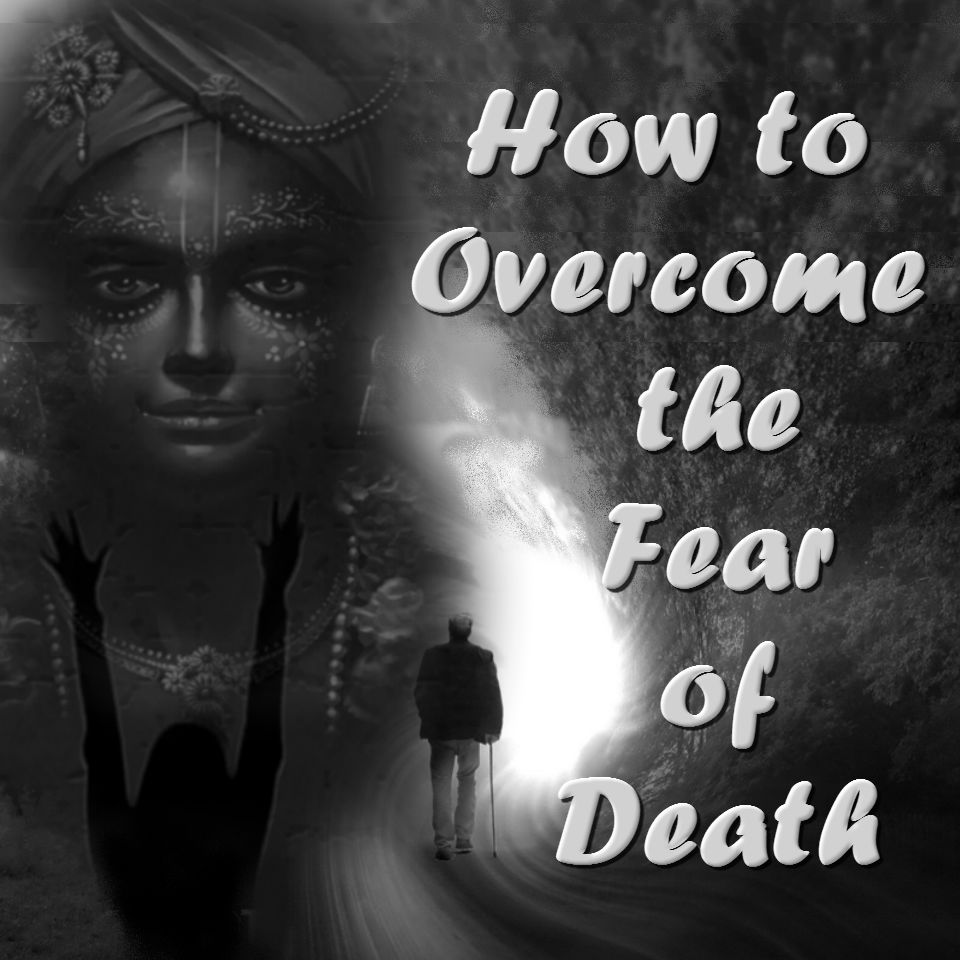
O’ Lord ! O’ My Lord ! May I never forget You !
Swami Ramsukhdas
|| Shri Hari ||
How to Overcome the Fear of Death ?
tvameva mata cha pita tvameva
tvameva bandhuscha sakha tvameva |
tvameva vidyaa dravinam tvameva
tvameva sarvam mama devadeva ||
Swami Ramsukhdas
|| Shri Hari ||
How to Overcome the Fear of Death ?
Desire is at the root of all sufferings of this world. Without pursuing material-pleasures, there can be no pain. It should be or it should not be so, this desire is at the root of all sufferings. At the time of death, fearful pain is caused to those people, who crave to live and yet have to die. If there is no desire to live, then at the time of death, one would have no pain. As no pain is experienced, with the departure of childhood (i.e. transition to youth or old age), so should there be no suffering on giving up of the body. The Gita says -
Dehinosminyathaa dehe koumaaram youvanam jaraa |
Tathaa dehaantrapraaptirdheerastatra na muhyati ||
(Gita 2/13)
"Just as boyhood, youth and old age – changes in the physical body of the soul do not affect the soul similar is the change to another body. A wise man never gets disturbed about it."
Vaasaansi jeernaai yathaa vihaaya navaani gruhnaati naroparaani |
Tathaa shariraani vihaaya jeernaanyanyaani sanyaati navaani dehi || (Gita 2/22)
"Just as a person casts off old clothes and puts on new ones, so does the self discard old bodies and acquire new ones."
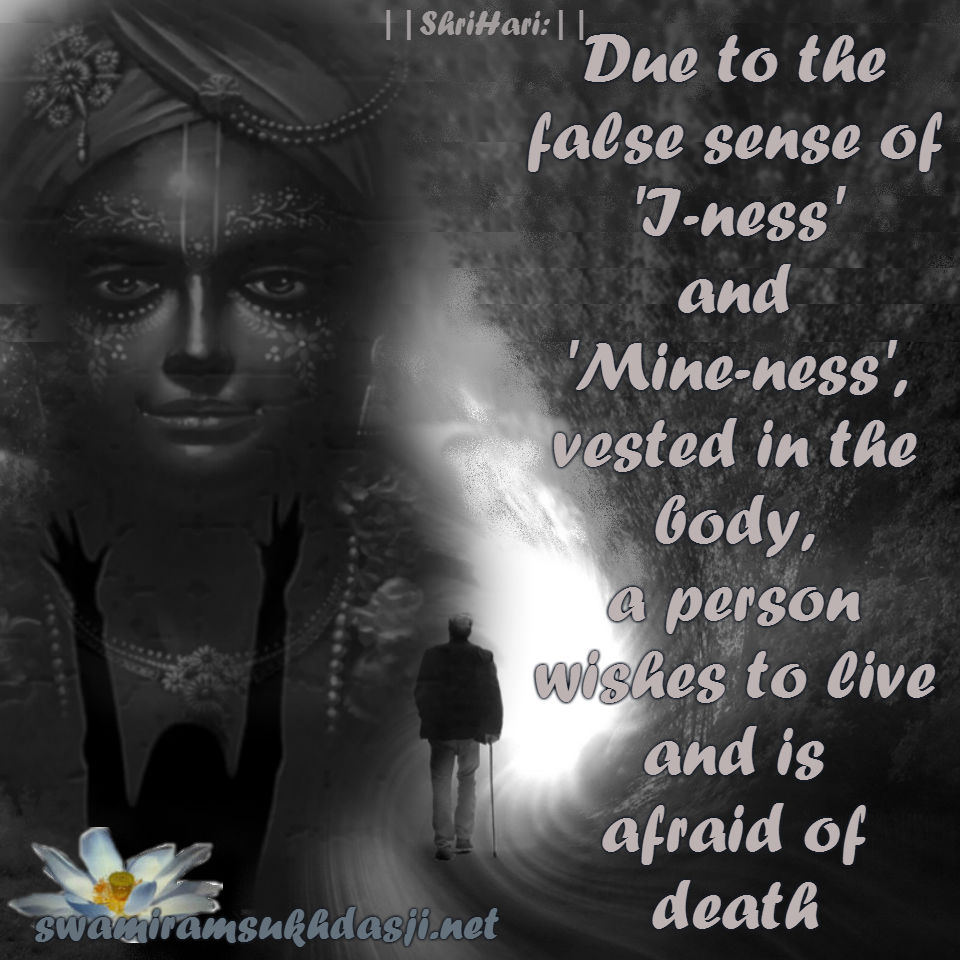
Due to the false sense of I-ness and My-ness vested in the body, a person wishes to live and is afraid of death; the reason being, that the body is perishable and the soul is eternal (non-destructible) and nobody can destroy it -
"vinaashamavyayasyaasya na kaschitkartumarhti" (Gita 2/17)
"none can bring about the destruction of the Atma" and
"na hanyate hanyamaane shareere" (Gita 2/20);
"The Self (soul) can never be killed, even when the body is slain."
Raam mare to mein maru, nahin to mare balaaya|
Avinaashi kaa baalakaa, mare na maaraa jaaya ||
"If Rama dies, then I die otherwise why should I die? The eternal part (ansh) of God neither dies, nor is killed."
The body dies every second and it does not stay still for a moment, while the soul ever remains the same and does not change at all. The desire to live or the fear of death neither affects the body, nor the soul, but affects those beings that even though they are immortal, identify themselves with the perishable body (through the sense of "I" and "Mine"). To treat one's body as the self is lack of discrimination, it is heedlessness and this heedlessness is tantamount to death -
"Pramaado vai mrutyuh" (Maharabharat, Udyoga 42/4).
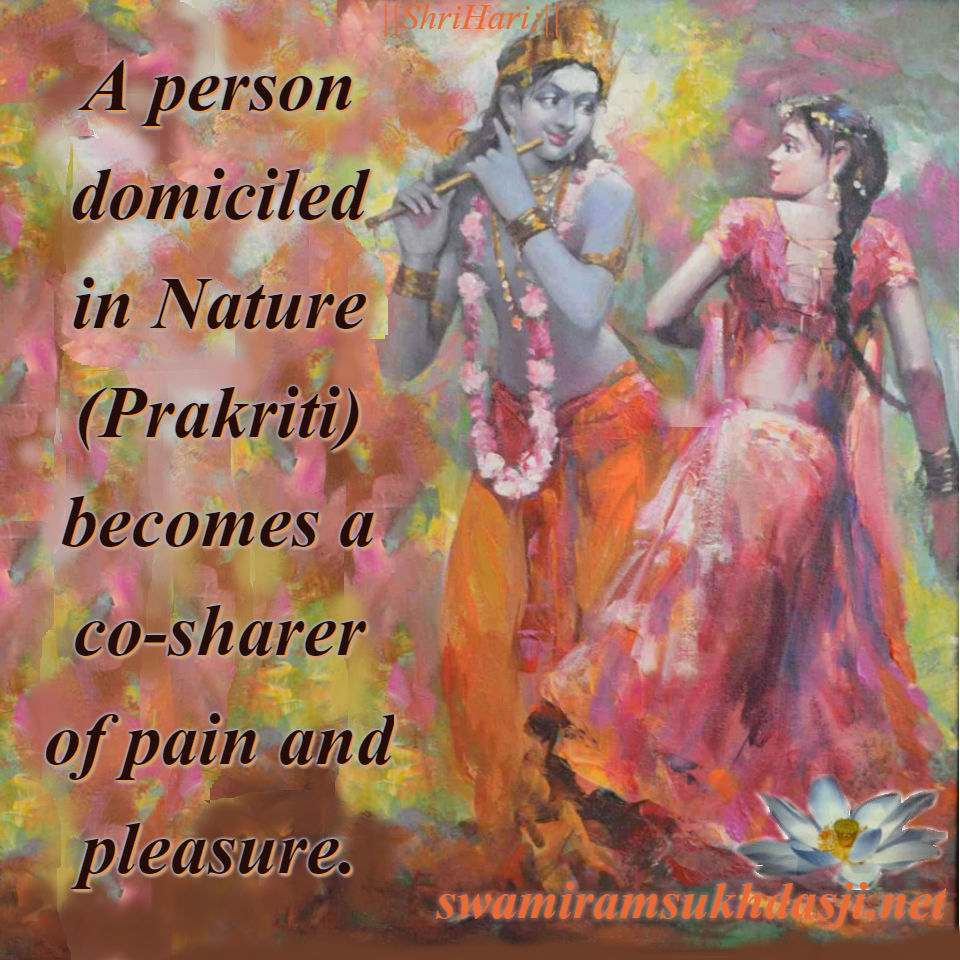
A person domiciled in Nature (Prakriti) becomes a co-sharer of pain and pleasure -
"Purusha prakrutistho hi bunkte prakrutijaangunaan"
(Gita 13/21);
"When the Purusha (the self) is seated in Prakriti (Nature), their union results in good or bad births."
Due to lack of understanding (power of discrimination) the soul vests in Nature. To treat the soul as one's body and the body as the soul, is ignorance, which causes all sufferings. The result is that a person wishes to hold on to his mortal body and does not aspire to realize his immortal self, that is what causes him to suffer. If he does not mistakenly consider the perishable body as his true self, and knows the true nature of the self, then he would not suffer.
The more there is a sense of "I" and "Mine" in a body, the greater the suffering at death. Lots of people keep on dying in the world, but we do not suffer any grief on their passing away, because we do not feel a sense of "I-ness" or "My-ness" with them.
At the time of death, there is bodily pain on one side and mental suffering on the other side. Pain comes from the body and suffering is in the mind. A person who is a recluse (vairagi) experiences physical pain, but not mental suffering; of course, the one who is attached to the body suffers terrible pain, while such pain is not endured by a recluse. One who has realized the self (bodha) and attained deep loving devotion to the Lord, such an emancipated great soul, a liberated soul and a lover of God, does not experience even pain. Just as Bali who was in loving devotion of the Lord's Lotus feet at the time of his death, did not undergo any pain and suffering. Just as an elephant with a garland around the neck remains unaware of it breaking and falling away, similarly, Bali did not even realize the departing of the body.
Ram charan drudh preeti kari baali kinh tanu tyaag |
Suman maal jimi kanth te girat na jaanayi naag (Manas 4/10).
After Self-realization, a person gets established in Reality which is truth, consciousness and bliss solidified in which there has never been any change, nor is, nor can ever be. On attaining divine love a person realizes and experiences (anubhav) extraordinary relish (rasa) and this love is perceived increasingly every moment.
After Self-Realization and on attaining divine love, a person experiences a feeling of joy and tranquility even at the moment of death. The reason is that such an exalted soul who has knowledge of Truth does not remain tied to one body and becomes all pervading (sarvayaapi), while a loving devotee of God passes into God's domain, in devotional service of the Lord.
He whose I-ness or My-ness has not gone away from his body, he too can experience joy at the time of his death, as in a brave soldier, a feeling of courage raises his morale and enthusiasm and though there may be pain in his body, but it does not cause him to suffer; on the contrary, he derives satisfaction and joy in doing his duty. He is so full of zeal that he keeps on fighting, even when his head is cut. After the order for hanging was announced to Khudiram Bose, he became so happy that he gained weight before his execution, as he was pleased to have accomplished his goal. On the birth of a child, a woman undergoes great pain, however, she does not suffer, rather, there is a certain sort of joy within, due to her attachment to the child, which helps her in overcoming her pain.
A greedy person feels great difficulty in spending his money, but if there is a possibility of making substantial gains, he might invest his money and if necessary, he will even borrow money from others at high interest and not find it difficult or painful. During the hot summer months, the disenchanted ascetics (Tapasvis), uses the five sacred fires (Panchagni), but due to having the aim of performing austerities, despite the heat, they do not suffer. Instead they experience joy in fulfilling their spiritual obligations. For a recluse, free from worldly attachment, a wife, son, riches, houses etc., are of no consequence and he does not miss these, nor does he feel any sadness without them, on the contrary, he feels happy. Not only that, many rich, Rajas (kings) and Maharajas (emperors), experience peace and joy in his company. So also, in death and in when in pain, it is possible to experience joy even if sense of "I" and "mine" is wiped out. And if the sense of "I" and "Mine" is completely eliminated, where there remains no one who is the "experiencer" (bhokta) of that pain, then who will suffer the pain?
If a person has no desire for worldly things, then their acquisition does not give him pleasure, nor does their loss or damage cause any pain. Both pleasure and pain are the result of desire. These are pairs of opposites which tie man to this world. In reality, pain and pleasure both are the same. Pleasure is in truth the name of pain, as pleasure is the source of pain: ‘ye his sansparshaja bhoga dukhayonaya yeva te.’ (Gita 5/22); ‘All pleasures born of contact with the worldly objects, are the cause of unhappiness.
If a person has no desire, then he rises above pain and pleasure and achieves bliss (Ananda). As the sun has neither day nor night in it, it always is all light, so in bliss there is neither pain nor pleasure, but there is bliss forever. Having attained this bliss once, there is no deficiency in it forever, because it is axiomatic, eternal and immutable.
If it were possible to fulfill all desires, then we would strive to gain the desire to live, and if it were possible to save oneself from death, then we would endeavour to escape death. But it is the experience of everybody, that all desires can never be fully met and that every human being born has to die. Then why the desire to and why the fear of death? By the desire to live, the cycle of birth and death would operate and the desire to live would also subsist. Therefore, for achieving immortality, it is essential to discard desire.
I am not the body that changes always, but “I’ (self) is constant there. If the soul was not perpetual, then who could know the changes in the body ? The knowledge of the changing objects or persons etc., is to one who does not change. The body is also not mine, because I have no control over it, and “I’ cannot keep it according to my wishes, nor can ‘I’ make changes in it, as ‘I’ please; nor can I hold it always with me. In this way, when I do not recognize this body as ‘I’ and ‘mine’, then I would have no desire to maintain it alive. With no desire to live, before departing from this body, one would realize immortality which is self-evident.
‘The unreal has no existence and the real never ceases to be’ (Gita 2/16) ‘Nasato vidyate bhaavo, naabhaavo vidhyate satha’
Truth is truth and untruth is untruth. Therefore there is no fear of the truth, or the untruth, If we are afraid of death, even then the body shall die, and without fear also it shall die. Only the mortal dies, so it is nothing new or damaging. It is therefore useless to be afraid of death.
Narayana ! Narayana !! Narayana !!!
From "Vasudeva Sarvam" in Hindi and "All is God" by Swami Ramsukhdasji
FOR MESSAGE IN HINDI PLEASE VISIT
Date : 3rd September, 2011 - Murtyu ke Bhaya se Kaise Bache?
http://www.satcharcha.blogspot.com/
************************************
WEBSITES:
ENGLISH: www.swamiramsukhdasji.net
HINDI: www.swamiramsukhdasji.org
http://www.shriswamiramsukhdasjimaharaj.com/
http://www.sadhaksanjivani.com/
HINDI BLOG:
ENGLISH BLOG:
http://www.bolharibol.blogspot.com/
FACEBOOK: https://www.facebook.com/swamiramsukhdasji
GROUPS
https://groups.yahoo.com/neo/groups/sadhaka/info
https://groups.google.com/forum/#!forum/sadhak_insight
OTHER
Contact:
sadhak@swamiramsukhdasji.net