|| Shri Hari ||
The Exceptional Teaching of Gita
(गीताकी विलक्षण बात)

Swami Ramsukhdas
|| Shri Hari ||
The Exceptional Teaching of Gita
(गीताकी विलक्षण बात)
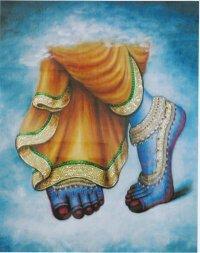
Tvameva Maata Cha Pita Tvameva
Tvameva Bandhuscha Sakhaa Tvameva
Tvameva Vidyaa Dravinam Tvameva
Tvameva Sarvam Mama Deva Deva
Swami Ramsukhdas
|| Shri Hari ||
The Exceptional Teaching of Gita
(गीताकी विलक्षण बात)
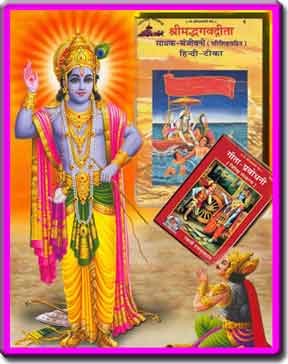
The Gita spoken by the Lord is singular and unique. The more one thinks and contemplates on the Gita, the more astounding are its revelations. If man acquires and becomes the Lord of the entire world, if he becomes the ruler of Indra’s kingdom, if he gets the entire wealth of Kuber, if he gets the post of Brahmaji, then too his sorrows will not come to an end. However, if he accepts the teachings revealed in the Gita, his sorrows will not last, they will end forever. His vexation, envy, slamming, turmoil, worries, mourning, fear etc. and all calamities will come to an end and he will forever attain a state where nothing remains to be done, to be known and to be acquired. In other words, a state called ‘Krtakrtagya, gyaatgyaatavya and praaptpraaptavya’, because this is the natural state.
There are such exceptional glories of the Gita which one cannot describe. The reason is that the speech cannot reach that description, the mind is limited in contemplating on it, and the intellect is finite in arriving at a decision. However, God’s speech is infinite. All objects born of Nature all limited and finite. Describing the ‘tattva’ (Divinity, Essence) that is beyond Nature cannot be done even by the intellect, which is an activity of Nature, then what can man describe ! Even the intellect cannot know Nature entirely, then how can it know the ‘tattva’, which is beyond Nature ? Just as a pot made of clay cannot even hold all the clay, then how can it hold the sky, the space ?
Gita clearly states - ‘Vasudeva Sarvam’ (Gita 7/19) - Everything is only God. Simply accept this point. Even if you cannot see, understand and experience it to be so, then too if with faith and belief, with a firm resolve if you accept God’s words, then by God’s grace, this point will automatically and on its own be understood.
God says -
Naasato vidyate bhaavah, Naabhaavo vidyate sataha I (Gita 2/16)
Meaning : The unreal has no existence, the real never ceases to be.
In these sixteen words is the entire Veda, Purana and the essence of our scriptures ! Unreal and real - these two have been called ‘Prakriti’ (Nature) and ‘Purush’ (Supreme personality), ‘Kshar’ and ‘Akshar’, Body and Indweller, Eternal and Temporary, Perishable and Imperishable etc. In seeing, hearing, understanding, contemplating, in deciding whatever comes to mind, it is all ‘unreal’. Through which is seen, heard, contemplated, it is also ‘unreal’ and the one that is seen is also unreal. The unreal is nonexistent and the real never ceases to be; this means that besides the real essence (the essential reality) God, there is nothing else.
It is everyone’s evidential experience that the body and the world that are seen due to our assumed affinity with it do not remain constant even for a moment. Rather they are perishing every minute. Just as first we were children. We never left childhood, then too it is gone. In the same way, youth also went away and old age will also go away, and the body too will go away.
The earth, the three worlds, the fourteen universes, the entire cosmos - are all going towards nonexistence - ‘Nasato Vidyate Bhaavaha’. However, God and the ‘jeevatma’ (Embodied soul, a ray of His consciousness) never become nonexistent - ‘Nabhaavo vidyate sataha’.
I have heard many stories from Holy text in my life, attended many discourses, read many scriptures, but at no place have I heard or read that God has changed, that He is not the same as before ! God ‘is’ changeless, existent, and the world is changing, nonexistent. The ‘Mahapurush’ (Great realized soul) who has realized the truth, that in essence both are the one ‘Paramatmatattva’ only –
Ubhayorapi isthotstavamayostattvadarshibhih I (Gita 2/16).
Meaning : The real (the unchanging) and the unreal (changing) are both separate. Real cannot be unreal and unreal cannot be real; however, in essence both are one only.
It has come in Gita -
Vidhyavinayasampanne braahmane gavi hastini |
Shuni chaiva shvapaake cha panditaah samadarshinah || (Gita 5/18)
Meaning : Sages see a learned, a humble Brahmin, a cow, an elephant, or even a dog or a lowly as with equal vision as they see God in all of them.’
In the same way though real and unreal are separate, a devotee sees in them the one God only –
Tvamaksharam sadsattaparam yat I (Gita 11/37)
Meaning : You are the being (real), the nonbeing (unreal), and that which is beyond both being and nonbeing, meaning, the Imperishable Brahma.
Just as day and night are both relative, day is in comparison with night and night is in comparison with day, but in the sun there is neither day nor night; in other words, it is impersonal. Similarly, being and nonbeing are personal as well as relative, but God is impersonal. Therefore, great souls who have realized the essential truth that in the end both being and nonbeing are one only, they have realized the Supreme Spirit.
That which ‘is’, is existent, and that which is ‘not’, is nonexistent -
Hai so sunder hai sadaa, nahin so sunder naahin |
Nahin so paragath dekhiye hai so deekhe naahin ||
That which is perishing is the world and that, which is remaining, is God. Just as Gangaji is constantly flowing and it merges into the ocean. At night if we hide and watch Gangaji, then too it continues to flow uninterruptedly. Whether someone looks at Her or not, whether someone knows or not, whether someone believes or not, She is least concerned. She constantly, uninterruptedly and naturally flows on Her own. In the same way, this entire world is constantly flowing, and while flowing it is moving towards nonexistence (meaning, perishing). In this world which is constantly flowing, God is ever present in the form of ‘Is-ness’ (meaning, existence). ‘The world is’ in this the ‘world’ is perishing, and ‘is’ is remaining.
Jaasu satya te jada maya |
bhaas satya iva moha sahaayaa ||
(Manas, Balkanda 117/4)
This world is seen. It does not have an independent existence; rather it is God’s singular glory, glimpse, light. Therefore, one must not keep his eyes on the glimpse, but rather keep the eyes on God only. One must not see the ‘is not’ (meaning, perishing, nonexistent) and see the ‘is’ (meaning, imperishable, existence) only. Gita has called this ‘Vasudeva Sarvam’. The purport is that the real, existent element is seen in the form of unreal, nonexistent ‘Sadasacchaaham arjuna’ (Gita 9/19). It is God only that is seen in the form of the world.
Just as besan (Chickpea flour) is much more bland than wheat, millet flour etc., there is no sweetness in it. However, with that flour one can make bundi (fried tiny round bead-like balls). Then this bundi is put in sugar syrup and it becomes sweet bundi. This bundi is extremely delicious and sweet. If you take a few bundis and suck on them, after a few minutes they once again become bland. The reason is that it was bland in the first place. The sweetness in it is that of sugar. In the same way, the world is also bland, in other words, the ‘Is-ness’ of this world is actually not of the world, rather it is of God only. It is only due to attraction that the ‘Is-ness’ is seen. However, this example is narrow. The reason is that sweetness of the bundi goes away on sucking it for some time, and the bland besan remains behind. However, on realizing God the world becomes nonexistent, nothing remains at all, only God remains - ‘Shishyate sheshasangyaaha’.
There are two things in this world - objects and activity. Entirely all objects and activities are God’s and they are a form (meaning, manifestation) of God only. Therefore, God says that do not accept any object and activity as yours, rather offer them all to me –
Patram, Pushpam, phalam, toyama, yo me bhaktyaa prayacchyati |
tadaham bhaktyuhyutamashnaami prayataatmamanaha || (Gita 9/26)
Meaning: Whosoever offers Me with devotion a leaf, a flower, a fruit or even water, I accept these devout offerings of a devotee with love.
In other words, I make these offerings merge into Me, they become one with Me. And further -
Yat karoshi, yadashnaasi yajjuhoshi dadaasi yat |
Yat tapasyasi kaunteya tatkurushva madarpanam || (Gita 9/27)
Meaning: O son of Kunti ! Whatever you do, whatever you eat, whatever sacrifices you perform, whatever charities you give and whatever austerities you do, offer them all to Me.
Wealth, land, house clothes, ornaments, this body mother-father, wife, children, brother-sister etc. whatever there is, offer all of it to God. The meaning of offering to the Lord is leave all sense of mine-ness with it. By offering it, the things will not reduce even a little bit, but the one who makes the offering will benefit greatly. The reason is that the thing offered is God’s and a form of God only. To assume these to be ours was a mistake in the first place. Therefore, by offering it to God, the mistake, misunderstanding, and stress will be wiped out. Just as when ‘ahuti’ (Sacrificial oblation) is offered into the sacrificial fire, it takes the form of fire, in the same way, the offered things blend with God and become a form of God.
It is not that God will get nourishment and His treasures will grow when making an offering. God has used the term ‘kurushva’ in ‘Tatkurushva madarpanam’. It means that by offering we don’t fill the void (meaning, shortage) in God, rather we get rid of our own void or personal issues. In other words, by offering, the fruit will be received by us only. We will benefit supremely. If we offer properly, then the offered object, the offering, the one offered to and the one offering - all four will become one; in other words, they will become Divine. The reason is the one offering, the act of offering, the offered object and the one offered to (God) - all four are in essence the One God - ‘Vasudeva Sarvam’ (All is God).
When food is offered to the Lord, then this ‘prasad’ is sought out by even the wealthiest of men. They bring their hands forward to get a little bit of that ‘prasad’, and are pleased on receiving even a little bit. Are these people starved of little sweets ? If you tell them, “I will get the equivalent amount of sweets from the supermarket”, they will be offended. The reason being that it is not the sweet they want, they want ‘prasad’ (Blessed food). By offering the food to the Lord, the thing becomes immensely blessed. It becomes sanctified. In other words, it becomes Divine ! In the same way, let us offer everything to the Lord, then it will all become ‘prasad’ (Blessed). If we eat food, it is the Lord’s ‘prasad’, if we wear clothes, it is the Lord’s ‘prasad’; Mothers and sisters ! If you wear jewellry, it is the Lord’s Prasad - everything is the Lord’s ‘prasad’, i.e. it will become Divine.
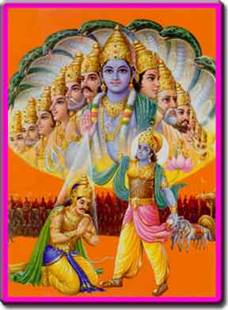
Tumhahi nibedit bhojan karahin
Prabhu prasaad pat bhooshan dharahin || (Manas, Ayodhya 129/1)
The meaning of offering to God is - to leave a sense of mine from the object offered. By having a sense of mine, the things become impure, and by entirely leaving the sense of mine, it becomes extremely pure, i.e., it becomes Divine. The homes of the Lord’s devotees where there is a temple of the Lord, and mothers and sisters ask the family members, “What food are we going to prepare for the Lord today ?” This is our Hindu sankruti (Culture) and civilization. Even meals are not prepared for ourselves; they are prepared for Thakurji (the Lord). Gita says -
भुञ्जते ते त्वघं पापा ये पचन्त्यात्मकारणात् ॥ (३/१३)
Bhunjate te tvagham paapa ye pachntyaatmakaaranaat || (Gita 3/13)
Meaning: He who prepares a meal only for himself and eats it, is a sinner that devours sins.
If one says that today it is quite cold, therefore let us offer some hot “halva” (sweet dish) to the Lord, and while saying so the mouth waters, then this food will not be regarded as an offering to the Lord (bhog), because it has become impure (as if, already eaten from that plate). However, the food prepared for the Lord, if it is taken out of the cooking pot in a separate vessel, and tasted to make sure that the proper amount of salt is in it, then it will not become impure. In this manner, if there is desire to eat, then even on not tasting the food, it becomes impure, and if there is no desire to eat, then to taste it for the proper amount of salt, then too it will not become impure, because the predominance is of the feeling and sentiments. Therefore if the food is offered to the Lord, not desiring to eat it, then the food can be joyfully consumed, considering it as blessed by the Lord
There is ‘rasgulla’ (indian sweet milk balls) as well as, ‘karela’ (bitter gourd) in ‘Annakoota prasad’ (a day of special offering to the Lord). One is sweet and the other is bitter, but both are ‘prasad’ only. In ‘prasad’ one must not focus on the taste, rather in the taste one must see an offering to the Lord. ‘Prasad’ is not the subject of taste, rather it is the subject of divine feelings and sentiments of the Lord. In this manner, offer all the objects and activities to God, then everything will become the Lord's ‘prasad’ i.e. it will all become divine. The reason being that everything (objects and activities) is God's, therefore there is no difference in the things and God. Just has riches belong to the rich, therefore there is no difference between wealth and the wealthy. Because without wealth (money) there cannot be the wealthy. and without the wealthy there cannot be money. (Money is like dirt). Actions and objects are the workings of Nature (world) and Nature is God's power. There is oneness between the power and the powerful. Without power one cannot be powerful and without being powerful, one cannot have power. Therefore when all things are God's they will all become divine - ‘Vasudeva Sarvam’. All is God.
Accept that we are God's only, we live in His home, we are doing work in His home, the are taking the ‘prasad’ given by Him, and with the ‘prasad’ given by God, we are serving His people. All of you, accept this point. Whether you are a brother or a sister, whether you are small or big, whether you are wise or unwise, whether you are educated or uneducated, whether you are sick or healthy, whatever ‘varna’ or stage of life or color, or country or group you belong to. All of you accept this point i.e. turn over all objects, activities and ourselves too, to the Lord (offer it to God). In this manner, by surrendering to the Lord, what will happen? God says -
Shubhshubhfalairevam mokshyase karmabandhnaih |
Sanyaasayogayuktaatmaa vimukto maamupaishyasi || (Gita 9/28)
Meaning: In this manner by surrendering all to Me, you will be freed from the fruits of the good and bad actions. Such a one who surrenders everything to me and who is freed from all bondages, will attain Me, in other words, you will become divine (My form).
Just as when you put wood, stone and even the darkest of coal into the fire, then it gets devoured by the fire, and begins to shine. In the same way, when you offer everything to God, the thing offered (actions and objects) and the one offering (you) both becomes divine (form of God) and begin to shine.
There was a good householder, who was a great devotee of the Lord. An ascetic came to see him at his house. The ascetic was very pleased to meet him. The sadhu (ascetic) asked for an introduction. The man said, he belongs to the Lord, and this house also belongs to the Lord. The man began to show his house to the sadhu. The sadhu asked, who does this car belong to? The man replied - It is Thakurji's (the Lord's). Who does this thing belong to? Thakuriji's (the Lord's). Who do these children belong to? Thakuriji ! Who does this lady belong to?Thakuriji ! Who do these people belong to? Thakuriji! As they walked through the entire lower level, then they went upstairs where there was a temple. He asked, who does this temple belong to? Thakuriji! All the things in the temple, who do they belong to? Thakuriji (the Lord)! These vessels made of gold and silver, who do they belong to? Thakuriji ! The sadhu pointed to the diety of Thakurji and said, who does this belong to? The man replied Thakurji belongs to me. The point is that everything belongs to the Lord, and is a form of the Lord, but the Lord is mine, therefore the Lord's things are ours only. But since the are ours due to the Lord, they have become sanctified ! And independently if they are ours, they become very impure. ! Meaning : He who prepares a meal only for himself and eats it, is a sinner that devours sins.
If one says that today it is quite cold, therefore, let us offer some hot ‘halwa’ (A sweet dish) to the Lord, and while saying so the mouth waters, then this food will not be regarded as an offering to the Lord (bhog), because it has become impure (as if already eaten from that plate). However, if the food prepared for the Lord is taken out of the cooking pot in a separate vessel, and tasted to make sure that the proper amount of salt is in it, then it will not become impure. In this manner, if there is desire to eat, then even on not tasting the food, it becomes impure; if there is no desire to eat, then to taste it for the proper amount of salt too, it will not become impure, because the predominance is of the feeling and sentiment. Therefore, if the food is offered to the Lord, not desiring to eat it, then the food can be joyfully consumed, considering it to be blessed by the Lord
There is a ‘rasgulla’ (Indian sweet milk-balls) as well as, ‘karela’ (Bitter gourd) in the ‘Annakoota prasad’ (A day of special offering to the Lord). One is sweet and the other is bitter, but both are ‘prasad’ only. In ‘prasad’ one must not focus on the taste, rather in the taste one must see an offering to the Lord. ‘Prasad’ is not the subject of taste; rather it is the subject of Divine feelings and sentiments of the Lord. In this manner, offer all the objects and activities to God, then everything will become the Lord's ‘prasad’, meaning, it will all become Divine. The reason is that everything (objects and activities) is God's; therefore, there is no difference in the things and God. Just has riches belong to the rich, therefore, there is no difference between the wealth and the wealthy (Because without wealth there cannot be the wealthy. And without the wealthy, there cannot be money. Money is like dirt). Actions and objects are the workings of Nature (meaning, world) and Nature is God's power. There is oneness between the power and the powerful. Without power one cannot be powerful and without being powerful, one cannot have power. Therefore when all things are God's, they will all become Divine - ‘Vasudeva Sarvam’. All is God.
Accept that we are God's only, we live in His home, we are doing work in His home, we are taking the ‘prasad’ given by Him, and with the ‘prasad’ given by God, we are serving His people. All of you accept this point. Whether you are a brother or a sister, whether you are small or big, whether you are wise or unwise, whether you are educated or uneducated, whether you are sick or healthy, whatever ‘varna’ (Class) or stage of life or colour, or country or group you belong to. All of you accept this point - turn over (offer) all objects, activities and ourselves too, to the Lord. In this manner by surrendering to the Lord, what will happen ? God says –
Shubhshubhfalairevam mokshyase karmabandhnaiha |
Sanyaasayogayuktaatmaa vimukto maamupaishyasi || (Gita 9/28)
Meaning : In this manner by surrendering all to Me, you will be freed from the fruits of the good and bad actions. Such a one who surrenders everything to Me and who is freed from all bondages, will attain Me; in other words, you will become Divine (My form).
Just as when you put wood, stone and even the darkest of coal into the fire, it gets devoured by the fire and begins to shine. In the same way, when you offer everything to God, the thing offered (actions and objects) and the one offering (you), both become Divine (meaning, form of God) and begin to shine.
There was a good householder who was a great devotee of the Lord. An Ascetic came to see him at his house. The Ascetic was very pleased to meet him. The Ascetic asked for an introduction. The man said that he belonged to the Lord and the house also belonged to the Lord. The man began to show his house to the Ascetic, who asked some questions; the conversation was - “Who does this car belong to ?” The man replied, “It is Thakurji's (the Lord's)”. “Who does this thing belong to ?” “Thakurji's (the Lord's)”. “Who do these children belong to ?” “Thakurji !” “Who does this lady belong to ?” “Thakurji !” “Who do these people belong to ?” “Thakurji !”
After they walked through the entire lower level, they went upstairs where there was a temple. The Ascetic asked, “Who does this temple belong to ? The man replied, “Thakurji !” “All the things in the temple, who do they belong to ?” “Thakurji !” “These vessels made of gold and silver, who do they belong to ?” “Thakurji !” The Ascetic pointed to the Deity of Thakurji and said, who does this belong to ? The man replied, “Thakurji belongs to me”. The point is that everything belongs to the Lord and is a form of the Lord, but the Lord is mine, therefore, the Lord's things are ours only. But since they are ours due to the Lord, they have become sanctified ! And independently if they are ours, they become very impure !
Narayana ! Narayana !! Narayana !!!
From book in Hindi “Sab Jagah Ishvar Roop” by Swami Ramsukhdasji.
To read in HINDI visit - http://www.satcharcha.blogspot.com/
June 18, 2013
A Note to the Reader
The special quality of the original is difficult to capture in a translation. Readers are earnestly requested, that if they have the knowledge of the Hindi language, to read the original book titled ‘’Sab Jagah Ishvar Roop’ in Hindi.
WEBSITES:
ENGLISH: www.swamiramsukhdasji.net
HINDI: www.swamiramsukhdasji.org
http://www.shriswamiramsukhdasjimaharaj.com/
http://www.sadhaksanjivani.com/
HINDI BLOG:
ENGLISH BLOG:
http://www.bolharibol.blogspot.com/
FACEBOOK: https://www.facebook.com/swamiramsukhdasji
GROUPS
https://groups.yahoo.com/neo/groups/sadhaka/info
https://groups.google.com/forum/#!forum/sadhak_insight
OTHER
Contact:
sadhak@swamiramsukhdasji.net